Math Games - Brain Training
Pavel OlegovichEducational
4.3936.00 Reviews
- Version
- 1.157-free
- Installs
- 10.00M
- Age Rating
- Everyone
Screenshots
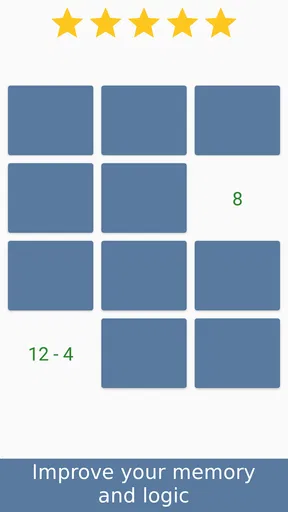
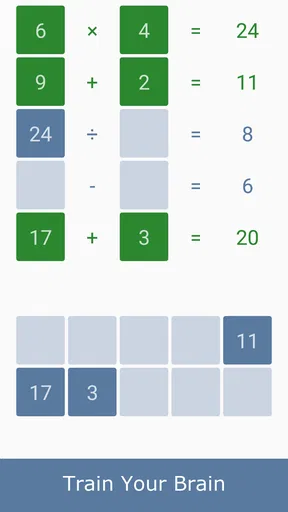
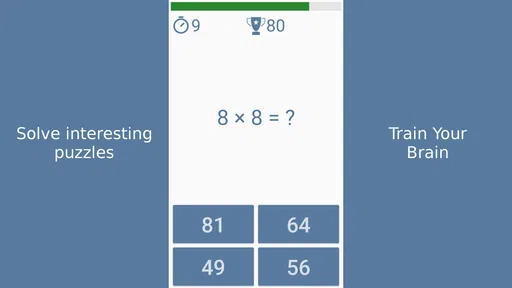
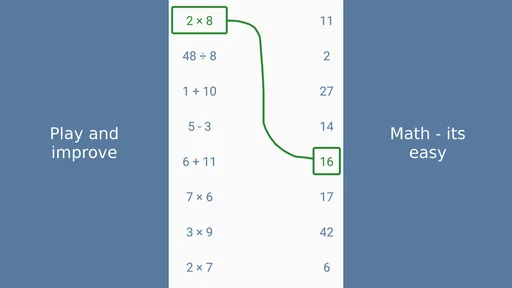
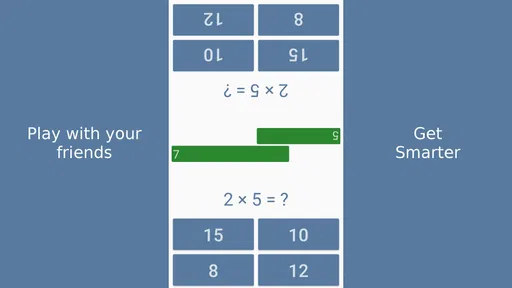
Our Review of Math Games - Brain Training
 Analysis by Appyee
I usually notice the best educational games by what happens after the first few questions. Do I understand why I got something wrong? Do I feel invited to try again, or am I simply moving through a worksheet with brighter colors? Math Games - Brain Training, an educational game from Pavel Olegovich, makes a good first impression because it turns short arithmetic challenges into a repeatable mental exercise. I answer, receive immediate feedback, and quickly find myself considering one more round.
That simple cycle is the heart of the experience. It is free, rated for Everyone, and aimed at both children and adults, so it is easy to imagine using it at a kitchen table, during a quiet break, or whenever I want something more useful than casual scrolling. The game has reached over ten million installs and holds a 4.3 average from around sixty-three thousand ratings, which suggests that its straightforward approach has connected with a large audience. Those figures matter less to me than the actual rhythm: the questions are small enough to begin without preparation, but they still ask me to pay attention.
How the math loop feels from the first question to the next session
I find the appeal of the math loop is how little effort it takes to begin: I can answer one question, notice how I approached it, and decide whether I want another round. That makes the game easier to fit around real life than a lesson that expects uninterrupted attention. Next, I’ll look at the small setup checks that can help a first session feel straightforward.
The first action is deliberately easy to understand
There is no complicated setup to learn before playing. The first meaningful action is simply solving a math problem. That direct start is one of the strongest choices here because it removes the hesitation that often surrounds learning apps. I do not need to build a study plan, choose a long lesson, or gather materials. I can open the game and begin working with numbers almost immediately.
This makes it approachable for different ages, although “approachable” does not mean every question will feel easy. A child can treat it as extra arithmetic practice, while an adult can use it as a short mental warm-up. The same question can serve different purposes depending on how I approach it: I might focus on accuracy, try to respond faster, or deliberately slow down to understand the calculation instead of guessing.
The game’s educational value comes from making that first action small. A large lesson can feel like an obligation, but one problem feels manageable. That distinction is useful for reluctant learners. If I am helping a child who loses interest quickly, I can frame the activity as a brief challenge rather than a formal study session. If I am using it myself, I can start during a spare moment without committing to a long block of time.
Still, the directness has a trade-off. Players looking for a story, character progression, or a richly presented adventure will probably find the opening plain. This is a math puzzle game first. Its appeal depends on whether answering problems is satisfying enough on its own.
Feedback keeps each answer connected to the next
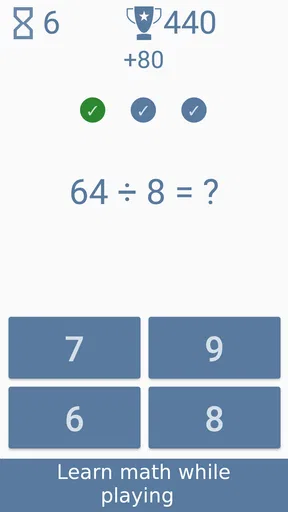
The most important part of the loop is what happens after I submit an answer. The game gives the result quickly, so I am not left wondering whether my reasoning worked. That immediate response creates a useful feedback rhythm: act, see the outcome, adjust, and continue. In a math game, this is more valuable than decorative presentation because a delayed correction allows a mistake to settle into memory.
I find the rhythm especially helpful when I resist the temptation to rush. If I answer incorrectly, the moment becomes a prompt to inspect the operation I performed. Did I misread the numbers? Did I carry too quickly? Did I rely on a guess because I wanted to keep moving? The game cannot replace a teacher explaining every method, but its quick response encourages me to notice patterns in my own errors.
For children, that feedback can support repetition without making every mistake feel like a major event. For adults, it works well as a reminder that mental arithmetic is a skill that benefits from regular use. I would not treat the game as a complete mathematics course, but I do see value in its ability to make practice available whenever attention is available.
One practical tip is to separate accuracy sessions from speed sessions. On one visit, I would answer carefully and use every error as a learning point. On another, I would try to maintain a steady pace. Mixing both goals at once can make a wrong answer feel more frustrating than useful. The game is more effective when I decide what I am training before I begin.
The reward is the return of confidence, not a substitute for learning
The reward in this kind of game is modest but persuasive: I finish a challenge with the feeling that I have exercised my mind, and that feeling makes another round attractive. There is satisfaction in getting a run of answers right, but the deeper reward is seeing that a calculation which initially required effort becomes more familiar after repeated practice.
That is a good fit for players who enjoy measurable personal progress, even when the game is not being used in a formal classroom. I can use it to wake up my attention before studying, to occupy a short waiting period, or to give a child a calmer alternative to entertainment that demands no thinking at all. The reward is strongest when I treat the session as practice rather than as a test of intelligence.
Parents should also keep expectations realistic. A child may enjoy the quick challenges without automatically learning the underlying method. If a wrong answer repeatedly involves the same type of calculation, I would pause the game and explain that idea away from the screen. Then I would return to the questions and see whether the explanation changes the result. Used this way, the app becomes a useful practice tool instead of being asked to do the entire job of instruction.
Adults can benefit from the same approach. If I am rusty with basic arithmetic, a few successful answers can rebuild confidence, but the game should not be used to judge broader mathematical ability. It is best for repeated, focused practice and mental engagement. Someone preparing for advanced algebra, geometry, or a specialized exam will need a more structured alternative with explanations and topic coverage.
The reset is what makes a short session repeatable
A good brain-training loop needs a clean reason to stop and start again. Here, the reset comes naturally from finishing one set of challenges and deciding whether I want another attempt. There is no need to wait for a long lesson to end before I can leave. That makes the game suitable for uneven schedules: I can play briefly, close it, and return later without turning the activity into a major commitment.
This is where I see one of its most realistic everyday uses. Imagine having ten quiet minutes before an appointment. I can open the game, complete a short burst of arithmetic, and stop when my time is up. The activity has a clear beginning and end, unlike an endless social feed that encourages me to continue without noticing the clock. The same pattern works after school, when a child needs a transition before homework, or during a commute if the device can be used safely and comfortably.
My advice is to stop while the session still feels manageable. Repeating problems until frustration takes over can turn a useful habit into avoidance. A child who is making several careless errors may need a break rather than another attempt. An adult who is tired may get more from returning later than from forcing a perfect result. The reset is not a failure; it is part of keeping the practice sustainable.
The limitation is that players who want a detailed long-term training plan may find this reset too loose. The game supports repeated practice, but I would still use a notebook, a school curriculum, or another learning resource if I needed to track specific weaknesses over time. Its strength is convenience, not comprehensive tutoring.
What makes the loop useful for different players
For younger users, the game can make basic arithmetic feel less intimidating because the work is broken into individual decisions. I would introduce it with a simple rule: accuracy comes before speed. Let the child explain an answer aloud when possible. That small habit turns tapping into active reasoning and makes it easier to identify whether the difficulty is addition, subtraction, multiplication, division, or concentration.
For adults, I think the best use is as a compact mental workout rather than a nostalgia-driven quiz. I can set a personal aim for each session, such as avoiding guesses or maintaining attention after a mistake. The game then becomes a way to practice concentration as well as arithmetic. It is particularly suitable for someone who wants an uncomplicated activity and does not want the overhead of a full course.
Teachers and tutors may also find it useful as an informal warm-up, but I would not make it the sole classroom resource. A group of students can have different levels, and a general math game may not match the exact skill being taught that day. It works better as optional practice, a transition activity, or a quick check of confidence before more detailed instruction.
People who should probably skip it are those seeking elaborate graphics, narrative motivation, multiplayer competition, or deep explanations after every problem. It is also not the ideal choice for learners who need accessibility or instructional features tailored to a particular condition unless the app’s presentation already suits them. In those cases, a specialized learning tool may be a better fit even if it feels less casual.
How it compares with worksheets, calculators, and larger learning apps
Compared with a worksheet, the game offers a quicker response and a more inviting starting point. A worksheet can provide a larger, more organized set of exercises and may be easier to annotate, but it does not naturally produce the same instant action-feedback cycle. I am more likely to begin a few questions in this game when I have only a short break.
Compared with a calculator, it has the opposite purpose. A calculator helps me obtain a result; this game asks me to produce the result myself. That makes it useful for mental practice, but inconvenient when my actual goal is checking a complex calculation. I would use the calculator for verification and the game for training, not interchangeably.
Compared with broad learning platforms, this title is lighter and less demanding. A larger app may offer lessons, explanations, progress paths, and subject-specific instruction. That is preferable when I need to master a concept or follow a curriculum. Math Games - Brain Training is more appealing when I want a focused arithmetic activity that can begin and end without much planning.
The best comparison is therefore not “which app has more features?” but “what job do I need done?” For a quick mental reset, this game is convenient. For diagnosing a child’s misunderstanding, teaching fractions, or preparing for a formal assessment, I would choose a structured resource and use this game only as reinforcement.
Practical ways to get more from each attempt
I get better results when I make the session intentional. Before starting, I choose one target: careful calculation, consistent pace, or learning from mistakes. After an incorrect answer, I avoid immediately tapping through just to recover momentum. I take a moment to reconstruct the calculation mentally. That extra pause turns feedback into practice instead of treating it as a simple pass-or-fail signal.
Another useful routine is to play at different times of day. A morning session can serve as a gentle attention starter, while an evening session can be a low-pressure alternative to more stimulating games. I would avoid using it when a child is already exhausted or upset; even an educational activity can feel like homework at the wrong moment.
For family use, I would keep the conversation focused on strategies rather than scores. Asking “How did you work that out?” is more helpful than asking how many answers were correct. If the player can explain the method, the game is supporting understanding. If the player is only tapping rapidly, slowing down is more important than completing another round.
One subtle strength is that the short format makes repetition less intimidating. I can revisit the activity after a break without needing to remember a complicated storyline or recover a place in a long lesson. One subtle weakness follows from the same design: because the loop is easy to restart, it can encourage mindless repetition. I have to bring the learning goal; the app supplies the prompts and the immediate response.
Device fit, availability, and the everyday decision
The game is available as a free title, which makes trying it low-risk for families and individuals who want a basic math activity without first committing money. It supports Android devices running version 7.0 or later, and the current release is identified as 1.157-free. Its Everyone age rating also matches the broad audience suggested by the gameplay, although younger children still benefit from an adult helping them interpret mistakes.
The developer is Pavel Olegovich, and the title has been available since February 19, 2017. That history, combined with its large install base, makes it feel like an established option rather than a newly appearing experiment. I would still judge it by my own needs: popularity does not make it the right instructional tool for every learner.
On an older compatible phone, the main question is not whether the game is visually spectacular but whether the questions remain comfortable to read and answer. On a family device, I would create a simple routine around it rather than handing it over as an unrestricted distraction. A few purposeful minutes can be more valuable than a long session driven only by the desire to continue.
My verdict on the action-feedback-reward-reset cycle
Math Games - Brain Training succeeds because its loop is clear. I take an arithmetic action, receive a quick response, gain a small sense of progress, and can reset for another attempt without a major barrier. That structure is easy to underestimate, but it is exactly what makes regular practice possible. I do not need to feel motivated for an hour; I only need enough curiosity to solve the next problem.
My honest recommendation is aimed at people who want accessible mental math practice for themselves or a child. It is especially good as a short daily habit, a warm-up before studying, or a constructive way to fill a few spare minutes. I would not recommend relying on it as a complete mathematics teacher, and I would steer players seeking rich stories, advanced lessons, or detailed correction toward a more specialized alternative.
After using it, I see the strongest reason to return not as a collection of flashy rewards, but as the chance to test whether today’s answers feel easier, calmer, or more accurate than yesterday’s. The game earns another session by making the next question feel manageable. That is a modest promise, but for an educational game, it is a useful one.
Verdict
Strengths of Math Games - Brain Training
- Short daily challenges make math practice easy to fit into a busy schedule.
- Covers arithmetic basics such as addition, subtraction, multiplication, and division.
- Quick feedback helps users spot mistakes and improve calculation accuracy.
- Suitable for children, students, and adults wanting extra mental exercise.
- Simple controls make most activities easy to start without a lengthy tutorial.
Limitations of Math Games - Brain Training
- Difficulty may feel limited for advanced users seeking complex mathematical problems.
- Repeated question patterns can become predictable after extended use.
- Some features or levels may require in-app purchases or display advertisements.
- Timed exercises may frustrate users who prefer relaxed, untimed learning.
- Progress tracking may not provide enough detail for serious study planning.
Similar Picks in This Category
View All
Little Panda Policeman
BabyBus4.0

Monster Trucks Game for Kids 2
Raz Games4.1

Little Panda's Chinese Recipes
BabyBus4.4

Little Panda's Restaurant
BabyBus4.4

Little Panda's Ice Cream Games
BabyBus4.3

Baby Panda Care
BabyBus3.8
Frequently Asked Questions
What is Math Games - Brain Training?
Math Games - Brain Training is a mobile app designed to improve calculation skills through short, interactive exercises. It commonly includes challenges involving addition, subtraction, multiplication, division, percentages, and number comparisons. The difficulty may increase as you progress, making it suitable for casual practice, students, and adults who want to keep their mental arithmetic active in an entertaining format.
Is Math Games - Brain Training suitable for children and beginners?
The app can be useful for children, beginners, and anyone who wants to practice basic mathematics, especially when it offers adjustable difficulty levels and simple visual instructions. However, the exact suitability depends on the user’s age and current ability. Parents should review the available content, advertisements, language, and privacy settings before allowing younger children to use it independently.
Does Math Games - Brain Training work offline?
Many of the basic math exercises can usually be played without a continuous internet connection once the application is installed. Some features, however, may require internet access, including advertisements, online rankings, cloud synchronization, updates, or optional purchases. If offline access is important to you, test the app in airplane mode after installation because availability can vary by version and device.
Is Math Games - Brain Training free to download and use?
The application may be available as a free download, but free access can include advertisements, limited game modes, or restrictions on certain lessons and features. Some versions may offer in-app purchases or a premium subscription to remove ads or unlock additional content. Before downloading, check the store listing carefully for pricing, recurring charges, and cancellation terms.
Does the app really improve mathematical skills?
Math Games - Brain Training can help improve speed, concentration, and familiarity with common arithmetic operations when used regularly. It should be viewed as practice rather than a complete mathematics course, since game-based exercises may not cover advanced concepts or explain every mistake in depth. Consistent sessions, reviewing incorrect answers, and combining the app with formal study will provide better results.
Play our best games!


